Low Brow Culture and Contrarian Politics in the Capital of the Left Coast
Argonaut360Logo

Published in San Francisco
since 1877

Vol. XXVIII No. 4955...
New Series No. Two.

New Editions Post Mondays and updated as we're provoked.
Sign Up by e-mail to the editor to automatically recieve notices of updates and new posts...

Ambroce Bierce, Founding Editor...
Warren Hinckle, Editor....

pne

US Flag

Advertise...


“I never truckled. I never took off the hat to Fashion and held it out for pennies. I told them the truth. They liked it or they didn’t like it. What had that to do with me? I told them the truth.”
      – Frank Norris.


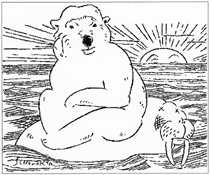
Bear Sitting on a Walrus

Since its first issue in 1877, the Argonaut has published this problem. The Bear washed out to sea is floating on the back of a walrus, in the Pacific Ocean.
He is thinking that if he devours it he will drown. If he remains on the walrus’ back, he will die of starvation. What to do?


Argonaut Dog with shirt Merchandise!!


Warren Hinckle

Advertise On the
Argonaut360


Back Print Editions,
Click to download

nov/dec 2006

jun/jul 2006


Recommended Books

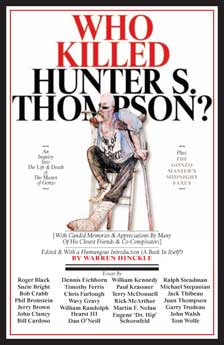
hunter

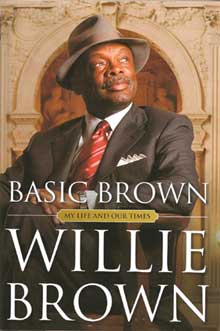
Willie Brown Book Cover Front

Willie Brown Book Cover Back

Available at: LastGasp.Com


About Us

The Argonaut goes on the Web, not entirely unnaturally in the cyclical order of things. When the Argonaut birthed, in 1877, in San Francisco, it was handset letter by letter from the printer’s case. A bottle of rye whiskey and a revolver were the third arm of frontier publishing. Many printers composed their own words as they set them in type, the typesetter became a publisher, and a century and a half later, the Internet enables a writer to punch in his words and have them in the electronic equivalent of print. Thus the Argonaut has come full circle.

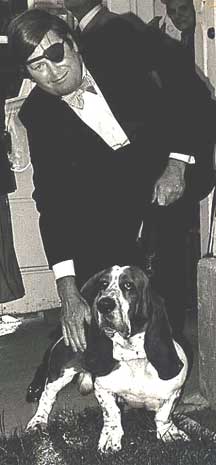
The annals of journalism are filled with many tall tales, but there are more yarns about startups than resurrections. The Argonaut is in the later category. It has been resurrected. This old wheeze was published in Frisco from the champagne days of 1877 until it halted from a deserved exhaustion in 1956. It was resuscitated by the San Francisco journalist Warren Hinckle in 1991 and has been published since in dismayingly different formats, mass distribution tabloid newspaper, magazine slick, printed and bound trade paperback, whatever worked. There is in our lengthy historie more than an element of eccentricity. Previous publishers of the Argonaut have included in their vaulted ranks real estate promoters, spiritualists and believers in the Christian Science religion. The current publisher insists on going everywhere with his basset hound, like Thurber’s New Yorker cartoon Man Walks Into Bar With Dog.

Argonaut’s first editor, from 1877 to circa 1879, was the genius misanthrope Ambrose Bierce, although most books on western history will dutifully record that the first editors were Frank M. Pixley and Fred M. Somers. That would be wrong. Pixley and Somers owned the press and the type cases in fee simple but they were mean frontier drunks, insufferable sots who were pro-railroad and anti-labor, and anti-Chinese and anti-Irish to boot. They briefly darkened the office door and were about town all day Seeing The Elephant, the term of art for activities in post Gold Rush San Francisco which largely consisted of consuming fifty drinks a day in thirty bars.

It was left to their employee, the young Bierce, to write and edit the whole damn thing every week. Bierce took delight in vilifying his bosses’ bigotry and he took the contrary editorial positions in the Argonaut, defending the Celestials and the sons of Erin. The publishers named on the masthead spent the coin but paid casual attention to the content of their paper under Bierce.

The two splendid years Bierce wrote and edited the Argonaut were the most progressive in his increasingly mordant and sour political history. The overworked Bierce struck back at the Argonaut’s besotted owners through the device of the epitaph coined in anticipation of the passing of an enemy: HERE LIES FRANK PIXLEY, AS USUAL, he wrote. Bierce also hands-down beat the better-known Stephen Crane in the ferocity of his anti-war stories about the Civil War.

The Argonaut will continue to publish in print but in the interest of saving trees and making money will devote considerable editorial energies to its web editions. The site is called www. Argonaut360 simply because there are too many pawn shops and such called Argonaut for that to be an exclusive domain on the Internet. The web Argonaut we suspect will break the cereal bowl of web site design by favoring long text and commingling 19th century style multi- deck headlines with 21st century outsider art, but what to do; this journal since the 1800s has been, almost steadily, on the quirky side.

From The Argonaut’s p.o.v, San Francisco is the Queen City of the Pacific Rim, and not because of our homogenized and beloved gay population. The way we see it, San Francisco is the prism for seeing the global connections of Latin America, Asia and the American West. These connections while historic are acutely cutting edge contemporary in terms of cuisine, art, architecture, living and life styles and the rest of the grand bundle that is Now.

So there you have it, or us, for what it is. The rest is up to Providence, and the whimsy of deadlines.

spacer ParkMerced Ad

The City: Topic A

San Francisco Alms House
An early San Francisco Alms House -- from The Annals of San Francisco, 1855

TAPS FOR LAGUNA HONDA?

Supervisors Vote Would Doom Venerated
Hospital as Home of Last Resort
For the City’s Elderly Poor

Board Puts Off Final Action, Schedules to
Again Reconsider Vote Next Week

Elsband, Heeding West of Twin Peaks Outrage, Succeeds in Delaying Tactic; Daly Plays The Reasonable Card, Questions Why Laguna Honda Should Be Downgraded to 720 Beds

AT ISSUE: TRASHING THE WILL OF THE VOTERS

San Francisco Senior Citizens In Need Would Be Increasingly Sent to Nursing Homes Outside The City;
As Elderly Population Grows,
The Beds for Them Would Be Gone

When, and if, the rebuilt Laguna Honda Hospital and Rehabilitation Center opens on schedule in late 2009, a light will have gone out in San Francisco — Spanish for St. Francis, the patron saint of the city — with extinguishing help from the San Francisco Board of Supervisors. St. Francis of Assisi, co-founder of the Franciscan Order that focused on providing care for the poor and sick, would himself be sickened to learn that Laguna Honda will undoubtedly open with far fewer beds than originally approved by the voters.

The exact number of beds the Supervisors will settle for will not be known until next week. Supervisors Elsbern and Daly objected to the low mark of 720 beds contained in an agreement originally approved by the City Attorney. In a closed session of the Board last week, the Supervisors sent the issue back to the drawing board for a second time, again asking the City Attorney to come up with a better number. A final vote is now scheduled for next Tuesday.

In 1999, voters were assured that if they passed a $299 million bond measure to rebuild Laguna Honda Hospital, that it would be rebuilt with all 1,200 beds for elderly and disabled medically indigent San Franciscans who need long-term care.

Prominent City fathers and mothers — ranging from then-Mayor Willie Brown, to the Director of Public Mitch Katz, to then-City Attorney Louise Rene, to Senator Dianne Feinstein — repeatedly assured voters Laguna Honda’s historic mission would be preserved.

For more than a hundred years, Laguna Honda first served as an alms house for the poor and chronically ill, and for sixty years, since 1950, has served as both a Rehabilitation Center and a skilled nursing facility providing long-term care to indigent San Franciscans.

But in October 2006, six residents of Laguna Honda hospital joined as Plaintiffs in the Chambers vs. City and County of San Francisco, alleging that they were being improperly institutionalized at Laguna Honda, claiming that the City was not doing enough to place residents into the “most integrated setting appropriate to their needs.”

That claim flies in the face of reason, and statistics.

A document issued a month later, in November 2006 — Current Levels of DPH Community Placement [Options] for Single Adult’s — by the San Francisco Department of Public Health documents that DPH manages 8,259 community-based placement locations. Elsewhere, the Mayor’s Office of Housing indicated that another 1,844 units were either under construction, had been completed, or are in pre-construction planning, for a total of 10,103 placement options.

However, if all 1200 beds at Laguna Honda are not constructed, the Department of Public Health will only have 863 “institutional” skilled nursing beds in which to place patients needing long-term nursing care. This is far shot of the mark as the city’s elderly population grows.


Pie Chart 1 Pie Chart 2  Pie Charts by Patrick Monnette-Shaw from Department of Public Health data.


A majority of elderly San Francisco residents needing long-term care would be rejected if the Board of Supervisors approve the pending Laguna Honda agreement. Statistics from the Department of Public Health illustrate that under the complex admission standards Supervisors are considering approving, a majority of the traditional elderly resident of Laguna Honda would no longer be approved for future admission. Under the agreement pending final Supervisors approval next week, only 16 percent of Laguna Honda’s residents as of October 31, 2007, as illustrated here, would have qualified for the 90-day short-stay admissions provision; only 24 percent of Laguna Honda’s admissions would have qualified for the rehabilitation program.

In 1999, the Board of Supervisors adopted resolution #336-99, authored by then Supervisors Sue Bierman and Mark Leno, restating San Francisco’s commitment to “developing sufficient institutional care, in addition to developing [community-based] alternatives to institutional care for seniors and people with disabilities.”

The Chambers settlement that the myopic San Francisco’s Board of Supervisors approved in February violates both the Board’s Bierman-Leno resolution and the will of the voters who voted in November of 1999 for a bond issue to rebuild Laguna Honda primarily as a home for the city’s elderly poor. On second reading, the Board declined to approve the agreement sent to them by the City Attorney

The Supervisors original approval – now being reconsidered - meant that there would be an insufficient level of skilled nursing beds to meet current and future needs of the traditional Laguna Honda population – San Franciscans keep getting older, and poorer, and Laguna Honda will no longer be the place with room at the inn.

At the Supervisors meeting last month, a rear guard action led by Supervisor Sean Elsbrend, with a surprising assist from Supervisor Christ Daly, who reversed his original vote for the settlement, won a cooling off period before a second vote. Elsbrend was reacting to his West of Twin Peaks constituents' anger that the bed size of Laguna Honda would be reduced by supervisory dictate, and Daly suggested that there should be a negotiated way to satisfy the neighborhood nonprofits without violating the will of the voters that Laguna Honda be rebuilt at its original bed level.

Extended Background:
Laguna Honda as the city has known and loved it has been shafted by the budgetary problems at the Department of Public Health – Public Health Chief Mitch Katz a few years ago began dumping troublesome psych patients at Laguna Honda where the staff was not prepared to treat them, and violent incidents ensued. At the same time, a lobbying effort by off-site non-profit groups seeking to grab of share of the social security money the elderly bring with them to Laguna Honda took hold, resulting in the Chambers lawsuit.

After the Chambers Plaintiffs filed their First Amended Complaint regarding Laguna Honda Hospital in October 2006, the Court issued on February 1, 2007 a “Joint Case Management” document outlining a time line for how the Chambers case would be heard. It proposed that discovery was scheduled to run through May 30, 2008; expert discovery would be completed by September 12, 2008; a hearing on dispositive motions would be held on December 18, 2008 and an alternative dispute resolution process would be completed by January 2009. The document stipulated the Chambers Plaintiffs wanted to take depositions from 40 witnesses, and the City, as Defendant, wanted to take depositions from 33 witnesses.

But fast tracking to one year later, Deputy City James Emory answered a public records request on February 8, 2008 stating that no depositions whatsoever had been taken at all.

The city was dragging its feet.

The Joint Case Management agreement then opted to engage in settlement negotiations in the absence of taking depositions, and the settlement agreement document was rushed through by negotiating the settlement terms “before Defendant makes any commitment of funding to construct a fourth building.” As early as February 2007, the City appears to have caved in to turning out the lights of the 420-bed West Tower that is now on hold, reducing Laguna Honda in the process to only 780 of the planned 1,200 beds.

The Joint Case Management document goes a long way towards explaining how the City Attorney’s office did not adequately represent residents at Laguna Honda who chose to stay there – the traditional Laguna Honda resident who wishes to opt out of the settlement agreement.

Rather than litigating and having the facts and truth about Laguna Honda be heard fairly before a judge at trial, the City in effect caved in and agreed to “negotiate” a settlement agreement. A lousy job of negotiating seems to have occurred considering: The City of St. Francis is projected to have a deficit of 3,000 to 4,000 skilled nursing beds just 12 short years from now, in the year 2020, just as San Francisco will have 10,000 people over the age of 85 who will have Alzheimer’s, many of whom will eventually need skilled nursing level of care.

In November 2007, the proposed Chambers settlement agreement was suddenly made public. The agreement, approved by the Supervisors on first reading and now subject to a revote, places a cap of 780 beds at Laguna Honda, and also stipulates that Laguna Honda’s mission will be for 90-day short-stay and rehabilitation patients; the agreement is at best ambiguous about Laguna Honda’s historical mission of providing long-term care.

Supervisor Chris Daly recently expressed concern about the flight of African American’s from San Francisco:

“One may choose to leave San Francisco, but when it's not a choice, when you are forced to leave, and you would prefer to stay — your family is here, your friends are here, you have neighbors, you have a community — and when you are forced out and you are displaced, that is a shame. And in a city that prides itself on being forward-thinking and progressive and open to diversity, we gotta do better.”
— Supervisor Chris Daly, Bayview Newspaper, February 6, 2008

The same problem exists with the Chambers settlement agreement as originally approved by a majority of the Board of Supervisors:

It will force hundreds of elderly and disabled San Franciscans to leave our City, since there are already an insufficient number of skilled nursing beds in San Francisco.

Although, the Department of Public Health first claimed it had begun negotiations with out-of-county service providers in order to find discharge locations for Laguna Honda residents, another recent public records request revealed that there “are no records responsive” to the request for contracts being negotiated to provide skilled nursing care in other counties.

Simply dumping our elderly into out-of-county facilities, and displacing them from their friends and family, is not what I would call “San Francisco values.”

Caring for San Franciscans in this city was what Laguna Honda was about, and what the voters wanted to continue.

It is of interest that The Board of Supervisors February 12 agenda failed to include any of the material terms of the Chambers settlement agreement, as required by the City’s Sunshine Ordinance that stipulates any legal settlements the City proposes entering into must disclose the material terms within the agenda item notice. And the ordinance the Board of Supervisors considered to accept the Chambers settlement also failed to fully disclose the material terms of the settlement - there is no notice that Laguna Honda’s decades-long mission to provide long-term skilled nursing care for those who chose to receive it at Laguna Honda was removed. The Chambers settlement dictated that Laguna Honda’s mission would be for 90-day, short- term care and rehabilitation – and nowhere in the original settlement language, is it mentioned that Laguna Honda will continue providing long-term care, and that the original bed level approved by the voters will be maintained.

The settlement as at first approved by the Supervisors has no provision to protect long term Laguna Honda patients who chose to receive skilled nursing care at Laguna Honda to “opt out” from being forced to be a class member to the Chambers settlement agreement; they will be forced by the Court to abide by any rulings the Court orders.

During the February 12 Board of Supervisors meeting Supervisor Sean Elsbernd questioned Deputy City Attorney James Emery about whether the proposed Chambers settlement agreement will restrict Laguna Honda to only 780 beds. Emery responded, in effect, that the plain language really doesn’t mean what it plainly says. The City is attempting to use spin control that the term “upon completion” of the current construction, the 780 bed limit will not exist in perpetuity, and the City will be permitted to later build the remaining 420 beds if it finds money to do so. Fat chance.

Elsbernd also grilled Emery regarding whether the Chambers stipulation that narrows Laguna Honda’s mission to provide 90-day short-term care and rehabilitation services will prevent Laguna Honda for caring for long-term care patients. Emery denied that long-term care patients would be excluded. However, they clearly will be excluded.

Shamefully, the Board 8-2 voted on February 12 to accept the Chambers settlement on its first reading, with Supervisors Chris Daly and Ross Mirkarini dissenting against passing the ordinance on first reading. Supervisor Alioto-Pier, for her part, departed the Board chambers just before the vote; she did not go on record, being found voting “absent” when it came to turning out Laguna Honda’s lights.

Testimony I presented to the Board of Supervisors and the Health Commission shows that a statistical snapshot of Laguna Honda residents - recorded on October 31, 2007 - illustrates that only 16 percent of then-current residents would qualify for retention if the Chambers settlement proposal restrictions regarding 90-day short-term care were to be enforced.

During the past five-and-a-half years between January 2002 and December 2007, only 24 percent of the 3,199 admissions to Laguna Honda were to its rehabilitation units. Obviously, 84 percent of LHH’s residents would not meet the 90-day short-stay provisions of the Chambers settlement.

It would be a simple matter for the Board of Supervisors to amend the Chambers language to specify in writing that Laguna Honda can continue to provide long-term care. If the Supervisors do not add that language into the settlement on second reading of the ordinance, the Supervisors will be throwing the switch to turn out the lights to 420 beds, and also turning out the lights to long-term care.

Both problems could easily be corrected with a stroke of the Board’s pen, and by introducing an “opt out” mechanism for Laguna Honda residents who chose to stay.

Shamefully, there has been an almost complete media blackout over the ramifications of the proposed Chambers settlement agreement Not one drop of ink has been spared by the City’s major dailies, neighborhood newspapers, or by alternative weekly newspapers in covering the shameful “Laguna-Honda’s-safety-net-lights-are-about-to-go-out” story.

The Board of Supervisors have an opportunity to remedy the situation by not voting to turn out the lights to 420 of St. Francis of Assisi’s beds.

Monette-Shaw is a healthcare and skilled nursing advocate.
For additional information, visit www.stopLHHdownsize.com


National

McCain's Underbelly -
His Anger

Until last week John McCain's political handlers had been complacently sketching out their basic strategy: to portray Obama as a mere novice in statecraft, devoid of those powers of mature wisdom and sober judgment with which the seasoned McCain is so richly endowed.

The problem here for McCain is that he's a dunderhead in statecraft, devoid of self control, capricious in moral standards and an imbecile in his lack of political judgment. Across the past four days these deficits have all come home to roost. Often, the deadliest wounds a scandal can inflict are on the second, third and fourth days, as the follow-up stories disclose " troubling new disclosures", "apparent contradictions" and the like. True to this pattern, each successive day since the New York Times finally disgorged ­ at least partially -- its story last Wednesday, has brought fresh disasters, particularly as the Washington Post and Newsweek play catch-up. As it progresses, the Iseman affair scandal discloses him as an idiot (the view of his horrified staff in 1999 as McCain, chairman of the Senate Commerce Committee paltered with the attractive 32-year old communications lobbyist), a liar (in his denials he met with Lowell "Bud" Paxson, the media operator for whom Iseman was working) and a hypocrite (in thundering against lobbyists and their employers, while traveling in their private planes, taking their money and doing them favors).

The better people get to know McCain, the less they care for him. This even seems to be true of Paxson, for whom McCain wrote his infamous letters to the FCC, and who now rewards McCain by flatly contradicting to the Washington Post statements from McCain's presidential campaign that the senator did not meet with Paxson or his lobbyist before sending two of those letters to the Federal Communications Commission on Paxson's behalf. McCain claims that the letters merely urged the FCC to hurry up and issue a decision on whether Paxson could invade the Pittsburgh radio market in a tricky maneuver that involved the FCC okaying the sale of a public affairs frequency to a Christian broadcaster who was in cahoots with Paxson. So, you're the chairman of the FCC and you get a kick in the ass from the head of the powerful senate committee that runs your budget, and you don't figure out how you're meant to click your heels? The FCC, shortly after McCain's letters kicked it in the ass, did duly click its heels, just the way McCain and Paxson desired. In the end the Christians queered the deal, for rather principled reasons.)

Was McCain so blinded by desire for Ms Iseman he didn't see that this behavior, from a man thundering against corrupt lobbyists, would remind people of the Keating scandal that nearly destroyed him at the dawn of his career in the senate. I certainly hope so. That at least would be a more estimable motive than wanting Paxson's money and trips on his campaign plane. At all events, the man obviously can't control himself, just like Bill.

In 1999, when McCain was battling George Bush for the nomination the Arizona Republic, one of the most conservative dailies in the country, editorialized about "less flattering" aspects of the senator's character "worthy of voter attention and consideration....Many Arizonans active in policymaking have been the victim of McCain's volcanic temper...McCain often insults people and flies off the handle." There is reason, the editorial concluded bleakly, "to seriously question whether McCain has the temperament, and the political approach and skills, we want in the next president of the United States."

Though the same paper has offered demure support for McCain this tine around, Democratic campaign commercials in the fall will surely be citing the paper's 1999 verdict, along with the considered judgment a few weeks ago of Thad Cochran, the Republican senator from Mississippi and a man who's known McCain for thirty years, that "The thought of his being president sends a cold chill down my spine. He is erratic. He is hotheaded. "

There was a famous fight in Arizona that went on for years about Mount Graham, on which the federal government wanted to put a telescope. Indians said it was sacred. Greens said its slopes sheltered the endangered Mount Graham red squirrel (Tamiasciurus hudsonicus grahamensis). In 1992, a couple of well-respected physicians, Robin Silver and Bob Witzeman, went to meet McCain at his office in Phoenix to discuss Mt. Graham. At the time of McCain's 1999 run the doctors told CounterPunch co-editor Jeffrey St Clair that at the mention of the words Mount Graham McCain erupted into a violent fit. ""He jumped up and down, screaming obscenities at us for at least 10 minutes.", Silver said. "He shook his fists as if he was going to slug us. It was as violent as almost any domestic abuse altercation."

Witzeman told Jeffrey that he left the meeting stunned: "I'm a lifelong environmentalist, but what really scares me about McCain is not his environmental policies, which are horrid, but his violent, irrational temper. I think McCain is so unbalanced that if Vladimir Putin told him something he didn't like he'd lose it, start beating his chest about having his finger on the nuclear trigger. Who knows where it would stop. To my mind, McCain's the most likely senator to start a nuclear war."

The last time anyone made that sort of charge against a senator from Arizona and presidential candidate, it was about Barry Goldwater, who ran against Lyndon Johnson in 1964. A famously effective campaign ad showed a little girl picking a daisy, which then mutated into a mushroom cloud. Painted as a potential nuker of the planet, Goldwater lost in a landslide.

The US press has fawned over McCain the "maverick" for years, but his colleagues in the Senate have long regarded McCain as a mere grandstander, posturing for C-SPAN's camera and microphone about wasteful spending, then meekly voting for the pork barrel items he'd been denouncing half an hour earlier. They snicker at his Cato-like affectations of moral purity, noting such seamy episodes as McCain's imprudent association in his early years in Congress with Charles Keating, an Arizona bank swindler, ultimately convicted and sent to prison. They point to the torrents of PAC money pouring into McCain's campaign treasury from the corporations that crave his indulgence as chairman of the Senate Commerce Committee. Communications companies (US West, Bell South, ATT, Bell Atlantic), have been particularly effusive in topping up McCain's treasury, as have banks and military contractors.

For such reasons it is foolish to think McCain will find it easy to put a shrewd debater like Obama on the defensive. And beyond such biographical impedimenta, the 71-year old Arizona senator totters towards the fall campaign under one huge burden which is not his fault. This week George Bush's approval rating sank to the lowest in the history of such polls, 19 per cent. There is abundant evidence that a very large number of Americans have simply had it with a Republican president. McCain has already attempted political suicide on the campaign trail at least twice, telling Michigan voters the US would be in Iraq for a hundred years, that they'd never get their jobs back and that he didn't understand anything about the economy. My man! A Republican debacle of Goldwater proportions could be in the offing.

Back to the New Frontier, Back to 1933!

A Republican debacle, amid an economic debacle. This week the crystal gazers of capital really started to tremble at the size of the rats coming out of the woodwork. Open up any of the financial pages or websites ­ or better still, read Mike Whitney's bulletins on this website ­ and you can really smell the panic. Of course crisis is endemic to capitalism. Just read the historian of booms and busts, Charles Kindleberger, in his Manias, Panics and Crashes", available in many editions. After Kindleberger, read Marx. But the balloon of fake credit is bigger and so the bang is bigger. In the end the state will pony up for the bail-out, but the way it's done will affect the livelihoods and well-being of millions of people. Obama had better start assembling the A team of advisors, not the rather drab, second-tier lot he's presently relying on.

Yes, I do assume, like most people, including the Clintons, that Obama will be the Democratic nominee. Hillary Clinton's campaign reminds me of Teddy Kennedy's run against Carter in 1979. Back then the press hailed the Kennedy machine as though it was a sleek locomotive, and not a rusting piece of equipment abandoned in a shed since the late 1960s. In a matter of two or three short months it had blown up. Same with Hillary's. No locomotive, but the Titanic, with the senior campaign personnel like Mark Penn ­ CEO of Burson-Marsteller up on the bridge, counting their millions in campaign disbursements while in whole counties in Ohio you can't see a Hillary sign in any front yard.

The Obama campaign, by contrast, has been brilliantly conducted. What Obama will actually do if elected is another matter. I doubt he knows. The main thing is to preserve a sense of realism. From the point of view of the well-being of the American Empire, a change in presidential image is certainly desirable, and from this point of view Obama fits the bill.

Change may be the mantra, but continuity is the undertow. Just look at Obama's recent remarks about Fidel Castro or about Afghanistan. In rhetorical invitation, though not in concrete matters such as prison sentencing, Americans believe in the possibility of turning to a new script and throwing the old script one away. But of course the ball and chain of history is clamped to every ankle. Has Obama made any mistakes? Not many, so far. That's the beauty of talking vaguely about the audacity of hope and the need for change. But even the word "change" has the sentries of the status quo shifting nervously as they peer out into the darkness. "All the talk about change, but without defining what that change should be is an opening for all kind of mischief," said Malcolm Hoenlein, the head of the Conference of Presidents of Major American Jewish Organizations, at a press conference in Jerusalem recently. Hoenlein told the Israeli press he's 'concerned' by the atmosphere surrounding Obama campaign, though he hastily stressed he has no problems with Obama himself. Already the Wall Street Journal is starting to fret about troubling signs of "populism" in Obama, particularly about his proposals on keeping manufactures in the US, as discussed on this site by Paul Craig Roberts this week.

In a Sixties essay about Martin Luther King, Andrew Kopkind wrote, "In spite of King's famous sincerity and the super-honesty he exudes, there is something disingenuous about his public voice He is not really telling like it is, but as he thinks his audience wants it to be Though he speaks of structural changes, he assumes structural preservation."

Remind you of anyone? It's not Obama's mistake if you believe what he says. Obama reminds me a bit of Jimmy Carter in 1976, talking about the need for a government as good as the American people. They both have the same national security advisor, Zbigniew Brzezinski. There's structural preservation for you.

Talking of continuity, a notorious scandal of the Kennedy years was JFK's defense secretary, Robert McNamara, overruling all expert review and procurement recommendations and insisting that General Dynamics rather than Boeing make the disastrous F-111, at that time one of the largest procurement contracts in the Pentagon's history. The suspicion was that Henry Crown of Chicago was calling in some chits for his role in fixing the 1960 JFK vote in Cook County, Illinois, to the impotent fury of the teenage Hillary Clinton, who was a poll watcher for Nixon. Crown, of Chicago Sand and Gravel, had $300 million of the mob's money in General Dynamics' debentures, and after the disaster of the Convair, General Dynamics needed the F-111 to avoid going belly-up, taking the mob's $300 million with it.

Henry Crown has passed on to the great pork barrel in the sky, but his descendants in the Crown clan are devoted contributors to Obama, giving him tens of thousands of dollars, as a glance at the website of the Center for Responsive Politics swiftly attests. The Crown family is still deeply involved in the affairs of General Dynamics. Lester and James Crown have both had seats on the company's board in recent years. General Dynamics has ties to Israeli military contractors. A 2003 General Dynamics corporate handout cited by Chicago Indymedia proclaimed "a strategic alliance with Aeronautics Defense Systems, Ltd.," an Israeli firm based in Yavne. Aeronautics Defense Systems Ltd. is the firm that developed the Unmanned Multi-Application System (UMASa) aerial surveillance tool which the Israeli military uses to "provide a real-time 'bird's eye view' of the surveillance area to combatant commanders and airborne command posts." The Indymedia story quoted then-Israeli Deputy Prime Minister Ehud Olmert,as saying the agreement between General Dynamics and Aeronautics Defense Systems to bring together "both companies' state-of-the art technologies in defense and homeland security" was "additional proof of the technological and commercial benefits that alliances between industries from the U.S. and Israel can produce." An eye in the sky over Gaza ends up as a dollar in Obama's war chest.

On January 11 of this year, hot on the heels of an editorial praising Obama as a Friend of Israel in the rabidly Zionist New York Sun, Lester Crown circulated a testimonial through the Jewish community, expressing his eagerness "to share with you my confidence that Senator Barack Obama's stellar record on Israel gives me great comfort that, as President, he will be the friend to Israel that we all want to see in the White House-stalwart in his defense of Israel's security, and committed to helping Israel achieve peace with its neighbors. Few public figures inspire as much hope and optimism as Barack Obama. Please pass on this message to all who are interested."

There isn't much of a left now, There was a one in the New Frontier years, including -- in my opinion -- Lee Harvey Oswald, who killed JFK to take the heat off Castro. Back then assassins thought the leaders were worth shooting. Assassins believed they could change things, or at least stop them in their tracks. Maybe that's why we don't have them the way we did in the Sixties. The would-be shooter puts his Mannlicher-Carcano back in the box, mumbling sadly, "What's the use?" As Michael Neumann remarked to me recently, "There is plenty in the historical record to support the claim that Oswald was a lefty. Something that is not so much in the historical record: I remember vividly how often in the months and years before the assassination, it was commonplace on the left to wish death on JFK - like getting shot, for instance. People weren't too big on his Latin American policies and, if they were paying attention, on how he escalated in Vietnam. The other thing I vividly remember is how lickety-split that talk not only vanished, but was purged from memory."

Brooding more generally on the Sixties, Michael went on, "the big difference from today was that for young people, of all classes, getting ahead was hard but getting a job was and always would be trivial. "They felt economically secure so they got into recreation, that is, into politics. The big scares were theoretical; no American had actually got nuked or had their freedom crushed by the commies. So people weren't cowardly, they were ambitious about what they could achieve."

Now, Neumann Neumann continued, "people feel that foreigners will come to kill them. They're paralyzed. The left feels, darn it, America does need to be protected-they're not into burning it down any more-which means they want America to end the wars it can't win, but not to be defeated. This absurdity explains why they do nothing." In the 1960s, leftists were very happy to contemplate the prospect of American defeat, so they didn't have to hate the war and love the troops. This was a lot less confusing. Even the left just can't imagine leaving those crazy A-rabs to their own devices. Ho Chi Minh projected competence and control because he was something recognizable in the West, a dirty commie. As Neumann concluded, "The Americans, having excised the secular left-wing rulers from Afghanistan and Iraq, now have to deal with ... foreign ways. As true Americans, left and right, they just can't hack that."

Alex Cockburn is America’s best political commentator.
This essay originally appeared in his online and print journal, CounterPunch.
www.counterpunch.com


Arthur Bruzzone interviewing Warren Hinckle on San Francisco /unscripted

View more clips of this interview online


Warren Hinckle's Journal


The Year of The Rat

Photo of Leland Yee and Ed Jew Ed Jew and Leland Yee in more mellow times

Who Ratted Out Whom
In Ed Jew Debacle?

As Jew Spars
With Former Attorneys,
Bizarre Details Are Revealed

Wife Put $10,000 of Alleged Bribery Cash
In The Vegetable Bin of Her Refrigerator

$10,000 STILL MISSING

Tapioca Parlors At Center
of Controversy
Still Open With Permit
Violations Unresolved

Q. What Was The Off-Bench Role of
    Judge Lillian Sing?
    Did Senator Leland Yee Do The Right
    Thing, Or Betray His Friends?

Conspiracy Charged;
Chinatown Gossip Pot Boiling

Ed Jew, we are informed, was born in the year of the Rat. This Chinese New Year is the Year of the Rat, and there was definitely a rat involved the astonishing fall from grace of former Supervisor Ed Jew, extending to the current internecine warfare among Jew, his new attorney, and his former attorneys. The rat could be Jew’s political rivals in the Chinese community, it could be Ed Jew himself, it could be opportunistic City Hall politics, or it could be a combination of the above. But somewhere, down there, in the damp, there is a rat.

It is a bit of a struggle to reach an acceptable metaphor for the levels of deceit and treachery in this story; it had a preposterous beginning, has a muddled middle and will have a perhaps more certain end – but still with question marks left dangling like the fingers of the falling grasping for a hold on a crumbling cliff; perhaps the metaphor should be something along the lines of Prince Yusupov serving up delicious cyanide treats for a suspecting but rapaciously hungry Rasputin.

The Ed Jew center, if one ever there was, has not held. He has fired one attorney and accused him of conspiring against him, and complained to the Bar Association about another former defense attorney in an apparent attempt to recover legal fees paid, a move which is viewed as almost comical by some amused members of the legal fraternity.

With all Jew’s attorneys in cockfighting mode, there is fresh blood upon the sand. An FBI document attached to filings in the case asserts that when the black shoes searched Ed Jew’s house in Burlingame – the casual reader may recall that there was this nagging question over whether the new Sunset Supervisor lived in his district, or in Burlingame, or had a wide stance, homewise – they found $10,000 in cold cash in the vegetable freezer compartment of Mrs. Jew’s refrigerator. When asked why she kept cash in the vegetable drawer, Mrs. Jew, according to the FBI, whose reliability in verbatim quotations not subject to wiretaps is at best colloquial, replied that since the last earthquake when the ATM machines went down it was a good idea to keep cash around the house.

She also allegedly told the visiting G-men that the whole ordeal would be “good” for her husband, “Make him tough.”

When it comes to public pissing contests, there is something of an uneven spray in the sworn affidavits recently submitted to the federal court by Jew’s new attorney.


13 (OR SO) UNASWERED QUESTIONS:

The late-great Hollywood Director Sam Peckinpah produced a cult-classic tilted “Bring Me the Head of Diego Garcia.”  In an odd way San Franciscans this past year saw a drama play out that could be titled, “Bring Me The Head of Ed Jew.”

Last fall Sunset Supervisor Ed Jew had more people chasing him than Osama Bin Laden.  Between federal, state and local investigations Jew was investigated by more agencies that Willie Brown and Jim Jones put together.

Last June the feds made their intentions known when the FBI raided then- Supervisor Jew’s office, looking for evidence of alleged bribery.  Rather than let this drama play out, when the assertion again surfaced, which had been made during the campaign, that Jew did not live in the Sunset residence he listed when he ran for Supervisor, local politicians could not resist piling on; there was blood in the water and that meant there would soon be fresh meat: The speculation around City Hall went this way:  Hey, the Mayor will soon have an appointment to make.  And if he should, perhaps, appoint the Assessor Phil Ting to Ed Jew’s job that could set up a triple play whereby the mayor would then also get to appoint a new assessor.  That would mean one new supervisor in the sunset, a new assessor, and, oh wow, if the Mayor then appointed a lame-duck supervisor, he could then have another supervisor appointment.

That was not how it worked out, but back then that was the water cooler buzz at Silly Hall.

A sort of Who Would Be The First to Get Ed Jew fever set in. Local office holders, from the Supervisors to the Ethics Committee to the City Attorney to the District Attorney could not wait on the feds to do their thing; the feds just take too long.  Soon a large part of city government was in lock step singing: “We will bring you the head of Ed Jew.”

The City Attorney moved first on the residency issue, leaving the District Attorney in the headline dust, which immediately field criminal charges against the Supervisor. Competing civil and criminal charges on the same issue made it all but impossible for Jew to defend himself at the same time against both. His due process rights sere crushed in the jaws of competing city departments all after his head. The City Attorney the upped the ante by asking the State Attorney General to let him bring a technical legal procedure to remove Supervisor Jew from office.

Jew finally resigned earlier this year (some legal observers felt that his last best hope of survival was to hold onto his job and fight the multi-jurisdictional charges against him one by one), fired his two previous attorneys and hired a new one, according to the Chinese press with the extra-judicial intervention of Judge Lillian Sing. All of this has left many questions, both unasked and unanswered, among them:

1. What was the nature of Judge Lillian Sing’s contacts with Ed Jew and his new counsel Stuart Hanlon?

2. When Supervisor Jew realized he was being followed last summer and contacted Chief Heather Fong to tail the tailers, did Fong a) first call Jew to tell him that the cars involved were FBI cars and he should contact them, or b) did she first notify the FBI that Ed Jew had called her to report he was being followed?

3. Was Ed Jew set up, ala John DeLorean (the car manufacturer who was the object of an FBI sting and subsequently got off with an entrapment defense) and if so, who set such wheels in motion? (Actually that is two questions)

4. Were the owners of the chain of tapioca shops, who were allegedly shaken down by Jew, truly victims?  Why have they not made their version available to the media?

5. Why were these alleged victim tapioca shop owners operating a formula retail chain without the conditional use permits for the past several years?

6. If the alleged victims were in need of a conditional use permit to operate chain stores (and operated without the proper permits), could that be considered an egregious violation of the city’s planning and tax process?

7. Whose job in city government was it to ensure that the alleged victims had proper permits and were paying proper franchise fees in an allegedly anti-chain store city?

8. Were these officials laying down on the job?  If so, why?  Incompetence?  Worse? (That is four questions)

9. How well does State Senator Leland Yee know the alleged victims in the Ed Jew shakedown?

Is Senator Yee also an associate of Robert Chan, the consultant allegedly involved in the shakedown? Was Senator Yee aware that the alleged victim tapioca shop owners were not paying proper franchise fees? According the the FBI, Jenry Mak, who lost the supervisor race to Ed Jew, first brought matter of the alleged shakedown to Senator Yee. Why did she not simply notify the authorities herself? Why did she bring in Yee?

10. Did Senator, or then- Supervisor Yee, receive any campaign contributions for the tapioca shop owners over the years?

11. Has Senator Yee received contributions from either Mak or her politically connected father?

12. Were any of these tapioca shop owners political donors of supervisor candidate Mak?  Did any of their names appear in the investigation of donors to Mak's recent supervisor bid in the Sunset?  How did Mak become involved?

13. Could someone bring a private suit to recover the franchise fee that the city should have been collecting?


CHINESE VENT GRIPES ABOUT ED JEW CASE

State Senator Leland Yee, Other Asian Politicians’Motives Are Scrutinized;

“The Chinese Community Is Very Saddened About What Leland Did”

Translated from the
World Journal Daily:

Headline: What was Leland Yee doing on the Ed Jew case?

Did he serve justice, or actually have other reasons?

In the Chinese community we all know Leland for many years - he is the future political star of our community.

But about Ed Jew’s case, the Chinese community is very saddened about what Leland did.

Ed Jew knew Leland for many years, always helping, volunteering on his campaigns. Robert Chan, the lobbyist who was involved in the Ed Jew scandal, was the brother in law of Roland Quan, longtime the head honcho of the CADC (Chinese American Democratic Club). Quan died of cancer a few years ago. He was a big supporter of Leland Yee and got his brother in law, Robert Chan, the job as Leland’s chief legislative aide.

Therefore for Leland Yee to snitch on Ed Jew was to snitch on Robert Chan, chopping off both his left and right hands.

Ed Jew’s competitor in the election for Sunset District Supervisor was Jenry Mak. Her father, Dick Mak, who was on the city’s Small Business Commission, owns many properties and businesses in the city. Jenry Mak said she would raise money for Leland in exchange for him endorsing her for Supervisor against Ed Jew. This Leland did. Ed Jew wasn’t happy because he had worked for Leland but Leland instead endorsed Jenry Mak.

For many years Jenry Mak had been an aide to then-Supervisor Theona Ma, now Assemblywoman Ma. Jenry Mak knew all the Sunset merchants, including the owners of the Quickly tapioca drink stores. The Quickly chain has stores in the Sunset, Castro, Chinatown, and many places in the city. After she lost the election to Ed Jew, Jenry Mak gathered all the tapioca information about alleged bribes and brought it to Leland to get revenge on Ed Jew. Leland, Ed Jew’s old friend, turned it over to the FBI without even talking to either Ed Jew or Roland Chan and telling them about the situation. . The three had been friends for over ten years.

Leland later said that what he did was in the “interests of justice.”

But what he did was very vicious to the Chinese community.

It was odd for the FBI to even get into the case, because the amount of money involved was a very small case for the FBI, which had passed other cases involving even larger amounts. What the FBI did with Leland’s information was to embarrass the Chinese community – make us look bad.

Two days before Ed Jew was busted, he called Police Chief Heather Fong informed her he was being followed and asked her to find out who it was. The Chief discovered it was the FBI, but she didn’t tell Ed Jew anything, instead she told FBI that he knows you are following him. Heather Fong at least could have warned Ed Jew off the record that other law enforcement was following him, but she didn’t. The SFPD in the past has not always cooperated closely with the FBI - but in the case of Ed Jew Heather Fong did. She did it to benefit herself, not to help the community; she has no shoulder to help anybody in the community.

Leland Yee has three more years in the State Senate, and could be re-elected, so has a long life as a Chinese politician.

But even if Chinese voters will vote for him, who will want to be his friend anymore? Look what he did to his own close friends Ed Jew and Robert Chan.

Leland recently came back from a trip to Taiwan. He now is solidly supporting that government, switching sides from past support of Mainland China. Nobody knows what sort of a deal he made in Taiwan.

In the controversy over City College’s plans to build a Chinatown campus, Leland Yee was the only Asian politician to and take the side of the Hilton hotel, whose Chinatown Hilton’s views were threatened by the new campus building. What kind of a deal did Leland make with the Chinatown Hilton? Nobody knows.

Leland Yee was born in Canton and should know more about the righteous and moral parts of the Chinese culture. Chinese have supported Leland for a long time, but they are now asking has he really done the right thing?


Take Another Look Department

Free Muni, Redux

Mayor Gavin Newsom had the cojones to ask the bureaucrats to see if an All Free Muni could be the answer to the city's transit problems and Muni's chronic deficits. The bureaucrats recently came back with the answer: No Can Do. No surprise there - imagination on the traditional part of the city's bureauracy and transit jockeys has long been a zero sum game. In the Take-Another-Look Department, consider this article about the way New York City could have free public transit, the view of veteran New York negotiator and lawyerly fixer Ted Kheel. It it well worth a read in terms of the originality and daring of the scope of his concept, based on core on congestion auto pricing, which the smaller and just as crowded, street wise, city of San Francisco will eventually have to deal with. If it could be possible for New York, more than six times our size, why could it not be possible for San Francisco? Back to the Drawing Board time, folks. - Ed

This article originally appeared in
The New York Press

TEDDY'S LAST JAM

93-year-old Theodore Kheel wants to make mass transit free. A crazy idea? Yes. A good one? Maybe.

Photo of Ted Kheel Ted Kheel

Ted Kheel’s not wearing a watch. At 93 years old, what’s the point?

To any New Yorker over 50, Kheel is a household name —or was—because he understood that it didn’t matter what time it was; the clock was always ticking, a deadline always loomed. As the city’s chief labor negotiatior through the 1960s and 1970s, he helped settle urgent strikes by teachers, transit workers and cops that threatened to paralyze the city he loved. He bridged the often distant gaps between belligerent workers and a cash-strapped city government, and averted crisis after crisis with his conciliatory methods.

Now, as he sits in his fifth floor office on East 55th Street, he has another deadline ahead of him—perhaps his last, and perhaps the most important of his career. If he could see down to the busy streets below, he would be able to point out, to a visitor, the crisis that has engaged his passion since the 1960s: the growing gridlock that has turned his beloved metropolis into a teeming mass of moving vehicles—or, more to the point, stalled vehicles stuck in a congested mess that threatens to overwhelm New York in the years to come.

Kheel saw the crisis building long before anyone else, and decades before Mayor Bloomberg turned “congestion pricing” into a buzzword for change. And now, as politicians scramble for sides in the likely battle over the mayor’s proposal to charge a toll on cars coming into Manhattan, the man in the white turtleneck and dark suit—possessed of a vast trove of energy that belies his age—has a proposal that will shock New Yorkers with its boldness, anger politicians with its simplicity and annoy experts with its impracticality.

He wants to makes the New York City mass transit system free of charge. No Metrocards, no toll booths, no monthly passes, no transfers. He wants all of us to be able to descend into the subway without a nickel to our name, and travel the length of our city at no expense. Perhaps he knows, in his still-beating, still-passionate heart that it will never happen, but he can’t help himself. He believes it’s the only way to save the city from the ominous prospect of overcrowding: to offer an economic subsidy to the needy New Yorkers who face, next month, yet another rise in transit fares, the 14th in 60 years.
This is Ted Kheel’s last stand.

The underlying argument of the Kheel plan—presented to the public at a Carriage House breakfast in January with his friend and fellow city legend, retired NBC reporter Gabe Pressman, at his side—is that with congestion pricing, the city can pay for the transit system, so riders won’t have to. Kheel has taken the cornerstone of his proposal, first offered to the city in 1971, and attached it to the Bloomberg administration’s congestion pricing model, only doubling it. Instead of an $8 toll for cars entering the most congested neighborhoods of Midtown, Kheel proposes a $16 fee. His plan also includes a 25 percent increase in cab fares, and would raise curbside parking fees.

But in keeping with the liberal, pro-government stance that has defined his entire career in city life, the Kheel plan puts City Hall squarely in charge of taxing the rich to help the poor.

Here’s the difference. The London-inspired plan detailed in Mayor Bloomberg’s plan calls for an $8 daily toll on passenger
vehicles “entering or leaving Manhattan below 86th Street,” and $21 for trucks, from 6 a.m. to 6 p.m. during the week. There would be no fees on the FDR Drive, the West Side Highway or West Street. Vehicles driving only within the city’s central business district would pay half price. In Kheel’s plan, the fee for passenger vehicles is double that: $16 for cars, and $32 for commercial vehicles. Although drivers are charged only for entering the Midtown area (the Kheel proposal involves only 19 tolls, contrasted with 340 in the Bloomberg plan), the fees apply 24 hours a day, seven days a week.

By doubling the Bloomberg price tag on cars and trucks, Kheel believes, the city can afford to cut subway and bus fares to nothing—the crux of his seemingly crazy proposal.

“The evidence is clear: If the price of mass transportation goes up, more people switch to automobiles. If congestion pricing goes up, more people switch to mass transportation… We’re not against congestion pricing, but we think it’s only half of the problem.”

The proposal may seem like an attempt by Kheel to upstage the mayor at fixing congestion, but Kheel—who last served the city in an official capacity in 1982—believes he shares with the mayor an idealized view of the city’s future. And there may be some truth to that; Bloomberg told WABC radio’s John Gambling in March 2007 that “from a public policy point of view, you really should have all of your mass transit free. And then raise fines and parking fees and everything else.” During his weekly broadcast, the mayor has made the same point at least two more times, calling free mass transit “the ultimate system,” and most recently calling it “the perfect system,” on the February 1, 2008 broadcast.

“Right now, the mayor—I think he’s a good mayor and congestion pricing is a good thing,” Kheel says. “He did mention at one point that free would be great. So I think this is something that the people [will] come to appreciate when they think about it...and how good it will be for working people and for the people who drive because there’ll be more using mass transit.”

Kheel’s vision for a fare-free New York goes something like this: In a New York where subways, buses and even commuter trains are free to ride, and motorists pay for the system through congestion pricing, pedestrians would be able to get around much easier, breathe cleaner air and, as he puts it, “every working person who uses the subway would have $1,000 more a year to spend.”

In Kheel’s romanticized view of a New York without Metrocards and congestion, residents would be more productive because they’d spend less time inching along in traffic. Stores would do more business, since people would have more time and more money to shop with and because so many businesses are located around subway stations, there would be much more public space that would, in effect, turn New York into a walking city with wider sidewalks and public plazas. More working class and poor New Yorkers in the outer boroughs would be able to commute to work, which would increase productivity and  offer them a chance to improve their financial situations and lifestyles, which would in turn improve the economy and society as a whole. And with fewer cars and trucks, and more bikers and walkers, there would be fewer auto accidents, which would lower insurance costs.

But could it work? For all his theoretical support for free mass transit, Bloomberg told Gambling during the February 1, 2008 broadcast that, it’s “not realistic.”

Security is among the many objections raised by equally rabid realists.  They point to the Staten Island Ferry, where free rides have encouraged increased vandalism. If subway stations were open to everyone, critics say, the same problem could occur. People would flock in droves to the stations. Regardless of their intent, an open house combined with congestion pricing could mean lots more people. And more people require more crowd control. Where would the additional police presence come from and who would pay for it?

And would subway cars suddenly become packed morning, noon, day and night? Could an already-overworked subway system handle the 28,000 potential new riders brought into the system by Kheel? Kheel expects 32,000 current peak time riders to switch to other modes of transportation, which “slightly more than offset,” the new riders. The bulk of them will switch to the commuter lines, which will be discounted, and the free buses, which will be faster since there will be fewer cars on the streets. He expects that 5,000 peak-time subway commuters who live near or in the central business district will start walking or biking to work instead.

In the end, Kheel insists, there will be 4 percent more space per passenger on the subway under his plan.
George Haikalis, a transportation planner and civil engineer who managed the Kheel study, says that there are now at least 1,000 new subway cars being built, with another 1,000 old cars marked for death that are, by his calculation, still salveagable. Haikalis also says that the tracks can handle more trains at peak hours—all except the Lexington Avenue Express and the E and F trains in parts of Queens.

But there are other, unanswered questions. What will happen to the MTA employees left idle by the Kheel plan? (“We envision no decrease,” the Kheel report says.) And how likely is it that anyone will approve a plan that charges drivers $16 to enter the city at 4:30 a.m. on a Sunday? Given the high cost—and the possibility that some businesses might opt out of a mid-Manhattan base in light of it—how can the Kheel team be so certain that congestion pricing revenue could pay for the transit system, year after year?

Dr. Michael Horodniceanu, a former commissioner for the city’s Bureau of Traffic, and now CEO of Urbitran, a planning, design and engineering firm, doesn’t “believe in the long run it could work without being supported by tax dollars.” He is intrigued by the concept, which he calls “bold,” and has a lot of respect for the Kheel authors, whom he says are “smart people.” But he thinks definitive studies are needed to see if free mass transit could work for New York. To describe certain parts of the Kheel proposal, he uses the term “half-baked.”

Kheel is well aware that many questions remain to be answered, and many potential problems are still to be solved. In fact, he concedes that he doesn’t expect his plan to be approved. Still, he embraces free transit as a mantra, much as he has for decades, without the slightest doubt in his firm, conciliator’s voice.

“This is the solution,” Kheel says. “And the city is going to have more people … another two million people. And I am convinced this is going to happen. I’m not convinced it’s going to happen this year. I know there are lots of things that need to be done to make a change of this sort, but the basic concept is sound. And it’s good for the drivers and good for the people who use the subways. It’s a sound approach to a very serious problem that exists throughout the world.”

After talking about his proposal for the better part of an hour, Kheel says he has to leave. He’s on his way to Gotham Hall, the cavernous bank-turned-event space in Midtown Manhattan, to attend a fashion show that will benefit Earth Pledge, an environmental group he is president of and founded in the early 1990s.

He will not be taking the subway. The only immediate sign of age is the bad back that requires Kheel to walk with a cane and an extra hand or two to get where he’s going, and which forces his athletic frame into a crouch when he stands up. He’s traded subway cars and buses for a car and driver that takes him to appointments. It’s a typically busy day for Kheel, who’s up every morning in his East 61st Street apartment at 8:30, at work from 9:30 to 6 or 7, and up til at least 10 p.m. (He likes to end each day with a viewing of The Colbert Report.)

When Kheel was born in Brooklyn in 1914, the first New York City subway line had only been in existence for 10 years, and single ticket fares cost a nickel—the equivalent of about 70 cents today, according to the Kheel report. The fare stayed put until 1948 when it doubled, the equivalent of 85 cents. But between 1948 and 1995, it was increased 13 times, and in 2003, it went from $1.50 to $2. The hike scheduled for March 2, 2008, will not increase the current $2 fare, but will raise one-day passes to $7.50 from $7, seven-day passes to $25 from $24, monthlies to $81 from $76, and the MTA will introduce a new 14-day pass for $47.

Kheel’s advocacy for free mass transit and congestion pricing grew out of his work with the transit system as an arbitrator. He was the city’s official mediator for Transit Authority disputes for more than three decades; he resolved some 30,000 labor conflicts during and after that period. As such, Kheel is no stranger to public crusades and controversy and has been fighting to keep transit fares down since the 1960s with a zeal that borders on obsession. “If I was half my current age, I’d run for mayor on a ticket for free mass transportation” he says in his slow but solid way of speaking.

But are free mass transit and congestion pricing actually the soul mates that the Kheel plan claims they are? Or is it Kheel’s final salvo—his one last stab at immortality?

When asked if he sees the proposal as his legacy, he laughs a little.

“I don’t know,” Kheel says. “I haven’t thought much about the legacy. Once you’re gone, you’re gone.”

It’s either false modesty or, from what interviews with one of his five daughters (he also has a son), his assistant and reams of newsprint overwhelmingly suggest, it’s a gross understatement. (His wife Ann, whom he married  the day after he passed the bar exam, died in 2003.) Whatever his motivations, Kheel has generally been known as a forward-thinking, optimistic altruist.

But after he was forced out by Mayor Ed Koch, who considered him excessively pro-labor, his profile began to shrink. While the lifetime New Yorker remained a highly respected figure, he was no longer the same Ted Kheel who, along with Mayor Robert Wagner, ended a 114-day newspaper strike in 1963 when federal mediators gave up. He was no longer the same Ted Kheel who, as the first chairman of Edmund J. Safra’s Republic National Bank of New York, arranged for Robert F.
Kennedy to cut the ribbon on the building when it opened in 1966. And he was no longer the same Theodore Kheel whose Park Avenue law firm The Washington Post called “a center of power in New York which commands the respect of labor and the city’s leading politicians,” in 1980. But he continued to settle labor disputes after leaving public office and then became concerned with environmental issues in the 1990s with sustainable development as his focus.

Here are some facts Kheel likes to cite when campaigning for free transit.

Increased traffic congestion will soon cost the city as much as $13 billion a year. At an average of 7.9 miles per hour, New York City buses are slower than Chicago’s (9.7), Boston’s (10.5), Washington, DC’s (11.2) and Los Angeles’s (12.3). According to a study conducted by New York City Transit (part of the MTA), 133.50 million subway riders in October 2006 became 143.50 million riders in October 2007, that’s an increase of one million people per month in just a year’s time.
With this kind of congestion, it’s difficult to fault Ted Kheel for feeling a sense of urgency, whatever the practical limitations of his plan may be.

And despite the doubters, there’s no question Kheel has captured some support for his plan. Robert Abrams, a former Bronx borough president and state Attorney General, has not read Ted Kheel’s proposal, but he began pushing for mass transit as soon as he was sworn in as Bronx borough president in 1970—angered by what in a New York Times article he called then-Governor Nelson Rockefeller’s “disgraceful acquiescence to the transit fare increase” from 20 cents to 30 cents. Abrams says he now believes that “mass transit is inextricably tied to the health of the economy.”

“[It’s] no mistake that Bloomingdale’s is located where it’s located,” Abrams says. Real estate values go up the closer they are to mass transit, he explains—which is why Abrams doesn’t think the system should have to be financed only by the riders. Either the burden should be shared, he says, or the city should pick up the entire tab.

“Basic vital services are provided by the government,” Abrams argues. “The police department, the fire department, the parks, sanitation—why not transit?”

Kheel sent copies of the plan to Mayor Bloomberg and Governor Eliot Spitzer along with a letter he signed, laying it on thick, by calling them “courageous reformers” but questioning their support of transit-fare increases, as “a policy that drives commuters back to the car, effectively nullifying the very result you are seeking to achieve through congestion pricing.”

They never wrote back.